Rust solo or with a team: why one player holding a monument beats a zerg
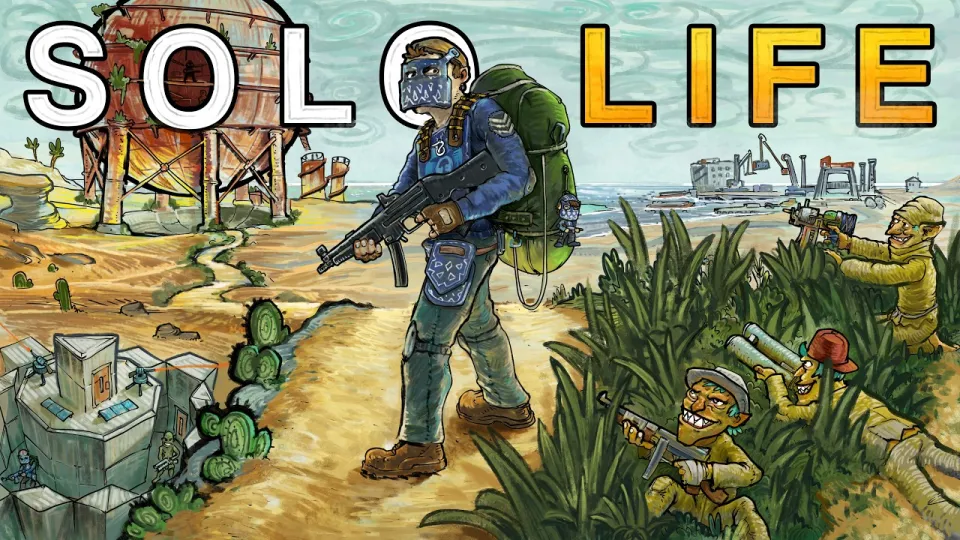
Video: Rust - THE SOLO LIFE V16
Want articles like this for your own video to promote it on YouTube and Google? Order them through the Telegram bot @sat_sit_bot. The bot writes and publishes the articles itself (with your YouTube video embedded) on popular topical websites (no ads). Try it free: 50 articles on us.
Key takeaways
- Blooprint's solo run centers on holding one monument alone while several neighbors try to push him out.
- A solo base needs a compact footprint, a fast loot route to the monument and a second stash for backup kits.
- Raid defense as a solo is about sound, chokepoints and door stacking rather than outgunning a group.
- Parachute drops and cargo give a solo player high-tier loot without a clan to cover the run.
- The channel's takeaway: solo Rust rewards planning and patience more than raw aim.
Rust solo play is not a weaker version of group play — it is a different discipline where one player holds a monument, controls the loot flow and defends a small base against several neighbors at once. That is the premise of Blooprint's solo run, and it holds up: a single player who picks the right monument, builds tight and manages sound can outlast a group that keeps wasting players on the same push. Anyone who wants to test it can start with the War Thunder signup bonus that sponsors the channel and keep the Rust session for the evening.
What holding a monument solo actually means in Rust
Holding a monument means controlling access to a loot zone long enough to farm it repeatedly, and doing it alone changes the whole calculation. A group can rotate players through Dome, Cargo or a launch site around the clock; a solo player has to pick a monument close enough to the base that a death costs seconds, not minutes. The practical rule is a base within roughly one sprint-and-a-half of the monument entrance, with a second exit that does not lead straight into the approach everyone watches.
Monuments worth contesting solo share three traits: multiple loot rooms, at least two ways in, and cover that breaks sightlines from the outside. Dome-style vertical layouts and cargo ships work because a solo player can hear a group coming up the same stairs and hold the angle. Wide open monuments with one ramp are a trap — a trio simply spreads out and pins you.
Building the solo base before the first fight
The solo base exists to buy time, not to look impressive, so the priority order is footprint, doors and redundancy. A 2x1 or 2x2 with an airlock, a double door stack and a small loot room behind two more doors will survive longer than a 3x3 tower that signals loot from the coastline. Keep the exterior boring: no windows facing the monument, no lights on at night, no visible furnace smoke line pointing at your door.
- Place the base before the first sulfur run, not after — you need somewhere to drop ore safely.
- Build the airlock first and the loot room second; storage can live in a box on the floor for the first hour.
- Add a second small stash or a hidden box cluster away from the main base for backup kits and spare guns.
- Keep one door openable from outside only with a key or code you can change, so a lost body does not mean a lost base.
- Stock two full kits before you start contesting the monument, not one.
Raid defense when several neighbors push at once
Raid defense as a solo player is a sound game, and the transcript-driven takeaway from the run is that most groups lose more than they gain by feeding players into one doorway. The defender knows the layout, the peek angles and where the soft side is; attackers are guessing. That advantage compounds when the base is small, because there is no second floor to clear and no long hallway to cross under fire.
Concrete habits that decide these fights:
- Stack doors so each one has to be blown separately, and put the loot room behind the door that faces the least likely approach.
- Use the repair bench and a spare door frame — a replaced door costs far less than a lost box.
- Listen for the first explosive rather than the first body; the raid starts before anyone reaches your wall.
- Keep a flank exit and use it. A defender who appears behind the attackers ends most pushes in under a minute.
- Do not chase kills into the open after a repel — that is how solos lose the kit they just saved.
Parachute drops, cargo and other solo loot windows
Parachute drops and cargo ships are the two events that let a solo player skip hours of farming, and both punish greed. A drop is a race: land, grab the crate, leave before the counter-push arrives, because everyone on the server saw the same smoke. Cargo is slower and safer — board from the far side, clear the deck in a fixed order, and treat the loot room as the last stop rather than the first.
For both, the solo checklist is the same: a cheap kit you can lose, a boat or minicopter staged nearby, and a stash point on the route home. If the run requires a full kit to feel safe, the run is not worth it yet.
Common solo questions from the Rust community
Solo players keep asking the same things, and the answers are mostly about tempo rather than gear. Groups look unbeatable because they arrive with more players, but each extra attacker also spends time, explosives and kits on a target that may hold nothing valuable.
- Is it worth fighting a group at a monument? Only when you have the angle and a fallback. Otherwise farm the same monument at a different hour.
- How many kits should a solo keep? Two ready kits plus materials for a third is the practical floor for contesting anything.
- What about friendly neighbors? A good neighbor is worth more than a turret — trade information, split monument hours, and do not share codes.
- Should a solo player ever run a duo? A trusted duo roughly doubles farm speed, but it also doubles the noise and the loot on the line; test it on a wipe you do not care about.
- Why do groups keep pushing a solo base? Because the fight is close and they are already committed; use that sunk cost against them.
Useful links
- War Thunder PC and console bonus
- War Thunder mobile bonus
- Blooprint on Twitch
- Blooprint on Kick
- Blooprint on TikTok
The solo verdict
Holding a monument alone works when the base is small, the route is short and the player treats defense as a listening exercise instead of a shooting one. The run shows the pattern clearly: a compact base, two backup kits and a willingness to leave loot behind beat a larger group that keeps spending players on the same door. Solo Rust is slower, but the losses are cheaper and the wins are entirely yours. Blooprint's channel is the right place to watch that pattern play out, and the War Thunder registration bonus is the link to use if you want to support the channel while trying something else between wipes.
Questions & answers
Can one player really hold a monument against a group in Rust?
Yes, if the monument has multiple entrances and the base sits close enough that a death costs seconds. The solo player only needs to control the angle the group must cross, not the whole monument. Groups usually lose interest once the push costs more kits than the loot is worth.
How big should a solo base be in Rust?
A 2x1 or 2x2 with an airlock, stacked doors and a small loot room is enough. Extra floors and windows advertise loot and give attackers more angles to clear. Keep a separate hidden stash for backup kits and spare guns.
Are parachute drops and cargo worth it for a solo player?
Both are worth it if you bring a cheap kit and a staged escape vehicle. A drop is a race against everyone who saw the smoke, so grab the crate and leave instead of fighting. Cargo is slower and safer if you board from the far side and clear the deck in a fixed order.
Should a solo player team up with a duo?
A trusted duo roughly doubles farm speed but also doubles the noise, the loot at risk and the chance of a betrayal. Test it on a wipe you do not care about before committing a serious run to it.
Source: Rust - THE SOLO LIFE V16 · Markdown version