What does the VALORANT Champions Shanghai group stage decide for the sixteen teams fighting for the world title?
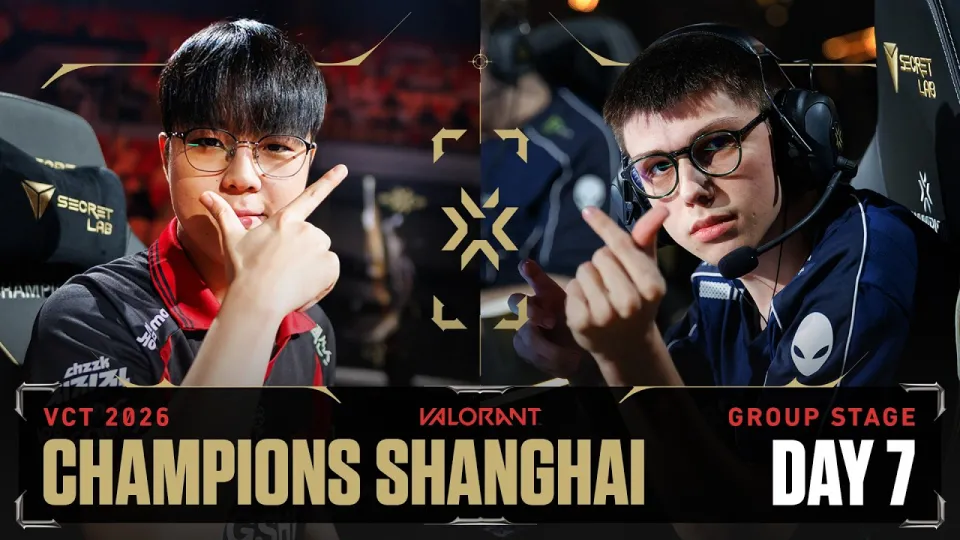
Video: VALORANT Champions Shanghai — Group Stage — Day 7
Want articles like this for your own video to promote it on YouTube and Google? Order them through the Telegram bot @sat_sit_bot. The bot writes and publishes the articles itself (with your YouTube video embedded) on popular topical websites (no ads). Try it free: 50 articles on us.
Key takeaways
- Sixteen teams from Americas, CN, EMEA and Pacific compete at VALORANT Champions Shanghai.
- The event runs from September 24 to October 18, with the group stage deciding who reaches the playoff bracket.
- Day 7 of the group stage was broadcast by the VALORANT Champions Tour channel and drew attention for repeated tech pauses.
- Two different Masters champions in 2026 set up Shanghai as the year's biggest test of consistency.
- Viewers questioned CN region depth and utility usage, and praised individual plays such as a Yoru clone fake.
VALORANT Champions Shanghai is the final and biggest event of the 2026 VCT season, where sixteen teams from Americas, CN, EMEA and Pacific play for the world championship trophy. The group stage, running inside a tournament window from September 24 to October 18, decides which teams advance to the playoff bracket and which go home early. Day 7 of that stage, published by the VALORANT Champions Tour, is a useful snapshot of how the meta and the pressure are shaping up; schedule details and daily updates land on the official VALORANT Esports X account.
The tournament matters because 2026 has already broken expectations: two different Masters events produced two different champions, and the description of the Day 7 broadcast frames Shanghai as the moment when familiar names, new contenders and a fearless generation of challengers collide. For anyone tracking the season, the group stage is where narratives either hold or collapse.
How the VALORANT Champions Shanghai group stage is structured
The group stage is the filter between sixteen qualified teams and the playoff bracket, and every match carries seeding weight. Teams arrive from four regions — Americas, CN, EMEA and Pacific — and the format rewards consistency across a series of maps rather than a single hot day. Because the event sits at the end of a long season, preparation depth matters as much as raw aim: map pools, set plays and mid-round calling get tested against opponents who have watched every previous match.
A few structural points define the stage:
- Sixteen teams, four regions, one trophy — the field is the largest of the year and includes both established organizations and first-time challengers.
- The group phase feeds the playoff bracket, so a strong group record can mean an easier path and a weaker one means an immediate do-or-die matchup.
- The event window runs from September 24 to October 18, giving teams several weeks of stage matches before the final.
- Broadcasts are produced by the VALORANT Champions Tour and streamed across Twitch, YouTube, Kick and other channels listed in the official description.
What Day 7 of the group stage showed
Day 7 was a long broadcast day, and the most visible talking point in the community was not a single clutch but the number of technical pauses. Multiple viewers counted an "endless series of tech pauses," and one popular comment offered timestamped spoiler protection partly because pauses kept shifting the run of play. For a stage match, pauses disrupt momentum: teams that rely on fast, scripted executes lose rhythm, while slower, read-heavy compositions can actually benefit from the extra thinking time.
The day also produced highlight moments. One viewer flagged a specific round where a Yoru clone looked, for a split second, like it was helping hold a site — a reminder that deception utility remains one of the most entertaining parts of the current meta. Individual performances drew praise too, with one comment nominating a veteran player for president after a strong showing.
The regional debate around CN teams
The harshest discussion in the comments focused on the CN region's performance, and it is worth separating emotion from analysis. Several viewers argued that CN teams lost rounds that should have been unlosable — eco rounds, 5v2 retakes — and that their utility usage looked rigid once set strategies broke down. Others went further and claimed stronger teams in other regions missed the event entirely.
There is a real tactical point underneath the frustration. When a team's default structure depends on rehearsed utility chains, opponents who force chaos — early aggression, off-angle pushes, economy-breaking saves — can expose a lack of improvisation. The counter-argument is equally valid: group stage matches are a small sample, CN teams play in a different competitive ecosystem, and adapting to international pacing takes more than one event. Either way, the group stage is exactly where those weaknesses get punished before the playoff bracket locks in.
Why tech pauses keep happening on stage
Technical pauses are a recurring feature of major VALORANT events, and the Day 7 chat treated them as a running joke. The practical reasons are rarely dramatic: peripheral failures, server or client issues, a player's setup needing a restart, or broadcast synchronization problems. Tournament rules typically allow a limited pause window per team, with referees verifying the issue before play resumes.
For viewers, the effect is more annoying than the cause. Long pauses break the flow of a best-of series, push broadcasts past their scheduled slots and make spoiler-free viewing harder — which is exactly why timestamped spoiler blockers have become a standard part of the community toolkit. For teams, the risk is concentration: a pause in the middle of a pistol round or a retake can reset momentum in either direction.
What to watch as the group stage closes
As the group stage moves toward its conclusion, three things decide who survives. First, map pool depth: teams that can only win on two maps get targeted in veto. Second, economy discipline: the eco-round losses that commenters criticized are often the difference between a 13-11 win and a 13-11 loss. Third, adaptation speed: the teams that adjust their setups after a loss on the same map tend to be the ones that advance.
For fans following the event, the official channels remain the fastest source of schedule changes, bracket updates and match results. The X account at https://x.com/valorantesports posts daily updates, while the full broadcast archive lives on the VALORANT Champions Tour YouTube channel.
Useful links
- Official VALORANT Esports news and schedule: https://www.valorantesports.com
- Daily updates on X: https://x.com/valorantesports
- Facebook: https://www.facebook.com/ValorantEsports/
- Instagram: https://www.instagram.com/valorantesports/
- TikTok: https://www.tiktok.com/@valorantesports
- Twitch: https://www.twitch.tv/valorant
The bigger picture behind the Shanghai stage
VALORANT Champions Shanghai is where the 2026 season's contradictions get resolved: two Masters champions, a deep field of sixteen teams and a challenger generation that has already broken expectations. The group stage is not just a qualifier — it is a stress test of preparation, economy discipline and the ability to improvise when scripted utility fails. Day 7 of the broadcast, produced by the VALORANT Champions Tour, captured both the spectacle and the friction, from highlight-reel Yoru plays to a stream of tech pauses. Follow VALORANT Esports on X for bracket updates and results as the playoff picture takes shape.
Questions & answers
How many teams play at VALORANT Champions Shanghai?
Sixteen teams qualify from four regions: Americas, CN, EMEA and Pacific. They compete across a tournament window running from September 24 to October 18, with the group stage feeding into the playoff bracket.
Why were there so many technical pauses during Day 7?
Major VALORANT events pause for peripheral failures, client or server issues and broadcast problems, with referees verifying each case. The pauses disrupt momentum for players and stretch the broadcast for viewers, which is why timestamped spoiler blockers became popular.
Are CN teams really weaker than other regions at the group stage?
The criticism in the community focused on lost eco rounds, failed 5v2 retakes and rigid utility usage once set plays broke down. That is a real tactical concern, but the group stage is a small sample and international adaptation takes more than one event.
Where can I follow the VALORANT Champions Shanghai schedule and results?
The official VALORANT Esports site at valorantesports.com and the X account at x.com/valorantesports post schedule changes and daily results. Full match broadcasts are archived on the VALORANT Champions Tour YouTube channel.
Source: VALORANT Champions Shanghai — Group Stage — Day 7 · Markdown version