Rust Cloth Farming Record Attempt Explained
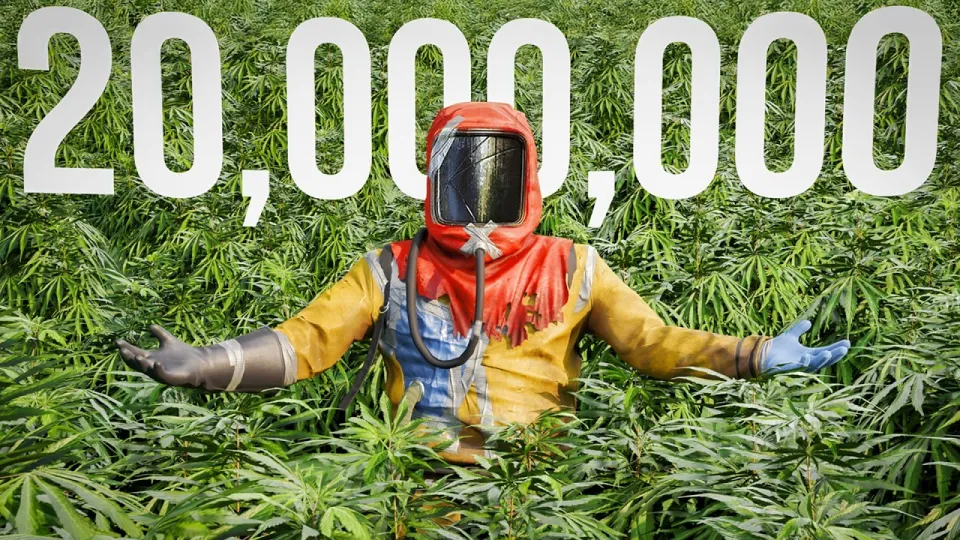
Video: I Became Rust's #1 Farmer...
Want articles like this for your own video to promote it on YouTube and Google? Order them through the Telegram bot @sat_sit_bot. The bot writes and publishes the articles itself (with your YouTube video embedded) on popular topical websites (no ads). Try it free: 50 articles on us.
Key takeaways
- The goal was to grow 126,000 starting cloth into 20,000,000 cloth within a single Rust wipe.
- The attempt ran for 7 days, with viewers invited onto the server to help build and defend.
- The farm became the biggest cloth farm in Rust, large enough to lag the server when rendered.
- A large Russian clan learned of the project and tried to stop it with PvP, raids and base defense fights.
- The whole project was documented in one JTeles video published on 25 September 2026.
Rust cloth farming is a numbers game, and the numbers in JTeles's experiment are absurd: he started a wipe with 126,000 cloth and set out to reach 20,000,000 cloth in seven days, turning a routine resource into the biggest farming project on the server. To get there he invited viewers onto the map, built what he calls the biggest cloth farm in Rust, and spent the wipe fighting off a clan that wanted the project dead. You can see the sponsor offer behind the run through the War Thunder free-to-play signup link used in the video.
What the 20,000,000 cloth challenge actually involves
Cloth is one of the cheapest and most common resources in Rust, which is exactly why a 20-million target is a logistical problem rather than a combat one. Hemp grows in the wild and in planters, and every planter needs seeds, water, light and, above all, time and space. Scaling from 126,000 cloth to 20,000,000 means multiplying the yield roughly 158 times, and that only happens with industrial-scale planting, harvesting, and transport.
In practice, a farm of that size means:
- Land and building space. Hundreds of planters need a compound large enough to hold them, with walls and defenses around it.
- Water and power. Sprinklers and lighting systems have to run continuously, which means generators, fuel and electrical routing.
- Labour. Planting and harvesting is repetitive work; splitting it across many players is the only way to keep it moving around the clock.
- Storage and logistics. Millions of cloth have to be moved, stored and counted without losing track of the target.
- Security. A base that large is visible from a distance and becomes a target the moment it is worth raiding.
The comment section picked up on the scale immediately, with viewers calling 20,000,000 cloth "pure madness" and comparing the grind to the most famous farming arcs in gaming content.
How viewers became the workforce
The project only worked because JTeles opened the server to his audience instead of farming alone. Inviting viewers turned the challenge into a community event: dozens of players planted, harvested, hauled resources and stood guard, and the compound grew into a developed, built-up settlement rather than a single player's base. That structure also created the most-praised part of the run, the shifts where clan members defended the farm while the owner was offline or asleep.
Running a public project on a Rust server carries its own risks. Strangers in a clan can leak coordinates, steal from boxes or simply leave, and the owner has to trust a large group with a base that represents days of work. The upside is throughput: a farm that would take one player weeks can be finished in a wipe when every planter is filled by a different pair of hands.
The clan war over the biggest cloth farm in Rust
Building the largest farm on the server made enemies quickly. According to the video, a massive Russian clan found out what was being attempted and did everything it could to stop the farm from being finished, which pushed the project into open conflict. That conflict played out across the full Rust toolbox: PvP fights around the compound, raids, base defense, resource farming under pressure and alliances with other groups on the map.
A base that lags the server when a player looks at it is not a hidden base. Once the farm was known, defense became a permanent job, and the run turned into a test of whether a viewer-backed clan could outlast an organized group that wanted the project gone. This is the part of the video that separates it from a pure farming guide: the harvest only continued because people were willing to fight for it.
Typical viewer questions about the run
Was the farm really the biggest in Rust? That is the claim the video makes, and the scale supports it: a compound of that size, with the server straining when it renders, is far beyond a normal solo or small-group planter setup. Exact comparisons with other servers are impossible, but within that wipe it was the dominant farm on the map.
How long did it take? The stated window was 7 days, one full wipe cycle. In that time the project had to go from 126,000 cloth to 20,000,000 while also absorbing raids and defense fights.
Did the grind affect the player behind it? Yes, and the video leans into it, including the moment where stepping outside after days of wipe-time farming is treated as an event of its own. Long farming sessions in Rust are famously draining, and a 20-million target multiplies that.
Could a solo player repeat it? Not in a week. A single player can run a few hundred planters with enough preparation, and veteran farmers report yields in the millions from large planter setups, but doing it alone without a clan to defend the base usually ends with the farm being raided before the harvest is complete.
All the links from the video
- War Thunder free-to-play signup for PC and consoles: https://wtplay.link/jteles
- War Thunder mobile version: https://wtm.game/jteles
- JTeles Discord community: https://discord.gg/jteles
- JTeles on Twitter/X: https://twitter.com/xJTeles
- JTeles on TikTok: https://www.tiktok.com/@xjteles
Final thoughts on Rust cloth farming at this scale
The 126,000 to 20,000,000 cloth run is less about cloth and more about organization: land, water, labour, storage and defense all had to scale at once, and a rival clan turned a farming project into a server-wide war. JTeles documents the whole attempt, from the first planters to the defense of a compound big enough to strain the server, in a video published on 25 September 2026. If you want to see how far a resource grind can be pushed when an audience joins in, this is the breakdown to watch, and the War Thunder registration page is where the video's sponsor offer lives.
Questions & answers
How much cloth did JTeles start with in the challenge?
He started the wipe with 126,000 cloth and set a target of 20,000,000 cloth before the wipe ended. That is roughly 158 times the starting amount, which is why the project needed hundreds of planters and a large team of helpers rather than a single farmer.
Why did a clan attack the cloth farm?
The farm grew into the largest structure of its kind on the server, and a massive Russian clan found out about the attempt and tried to stop it. That led to PvP, raids and base defense fights, with the farm's defenders holding the compound while the owner was offline or farming elsewhere.
How many planters would a 20 million cloth goal need?
There is no fixed number, because yield depends on planter size, genes, water and light, but veteran players report setups of around a thousand planters producing yields in the millions per harvest. Reaching 20,000,000 in one wipe requires repeating those harvests many times with continuous planting and collecting.
Is this video a farming tutorial or an entertainment series?
It is an entertainment documentary of one wipe rather than a step-by-step guide, though the scale of the build makes it useful as a reference for how large farms are organized. JTeles focuses on the community effort, the conflict with the rival clan and the strain the compound put on the server.
Source: I Became Rust's #1 Farmer... · Markdown version